New Zealand Listener 23 Jul, 2026
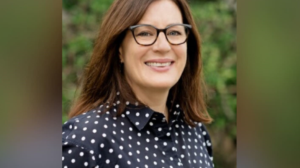
A dreamy walk through Venice to celebrate Kate Wareham’s 50th birthday turned into a nightmare when she was struck down by a mystery seizure that was so violent it dislocated her shoulder and had her foaming at the mouth. She tells Paulette Crowley how she was diagnosed and lives with epilepsy, a condition that affects about 50,000 New Zealanders.
Last year, my family and I travelled to Europe to celebrate my 50th birthday. We were in Venice, walking around and enjoying the scenery when I had a huge tonic-clonic seizure. On the scale of seizures, it’s the most serious type.
Tonic-clonic seizures used to be known as grand mal seizures, which are often caused by epilepsy. So that’s how my epilepsy started – with a real bang, the day before I turned 50 in a foreign country. Just before the seizure I was incredibly confused. Then I dropped to the ground with my arms and legs shaking, my jaw was completely clenched shut, my lips were blue and I was foaming at the mouth. The seizure lasted around four minutes, and I was non-responsive for about 15 minutes.
My shoulder was dislocated during the seizure, which is not uncommon. It can be caused by well-meaning people trying to move you into a recovery position. My family and I later learnt never to move someone having a seizure as it can cause serious injury while the muscles are contracting.
I have no memory of what happened but apparently I was quite agitated and wanted to get away from the paramedics who were trying to help me. I started to regain a sense of where I was when I was on the ambulance, which was a boat, because it was Venice. I rang my partner and said, “Hey, I’m on a boat – where are you?” I had no idea what was going on.
I spent about 12 hours in the emergency department at a Venice hospital. They told me I might have epilepsy but would need further testing. We were about halfway through our trip but decided to come home. It was just too scary to carry on travelling when we didn’t know what was going on with me. The after-effects of a seizure like that are significant. I had memory gaps and dizzy spells and I was super, super tired.
In Wellington about a month later I was tested for epilepsy. One of the tests was a “sleep-deprived” EEG (electroencephalogram) because lack of sleep is often a trigger for epilepsy. You only sleep for about three hours the night before and then they try to induce a seizure with strobe lights, hyperventilation, and all sorts of tricky questions to try and answer to get your brain firing up. The EEG confirmed that I had epileptic spikes.
Someone described epilepsy to me as a kind of lightning storm in your brain. It’s a neurological condition where the brain’s electrical activity fires up and spreads across your brain in ways it’s not intended to. It can be caused from an abnormality in your brain, like a tumour, or from a head injury or substance abuse. But most people, like me, have no known cause for epilepsy. There’s no cure for it.
As soon as I was diagnosed, I was put on anti-seizure medication, which is the first line of defence. I had a couple of episodes last year while on the first medication the doctors tried. These were called absence seizures, where you kind of lose a portion of time. I had this weird sense of déjà vu, where I knew I hadn’t quite been there. I’m now on a medicine called lamotrigine, which so far seems to be working to prevent seizures but it’s early days.
Getting enough sleep is the next-most important way to prevent epileptic seizures. If I think I’ve missed a significant amount of sleep, I have to be mindful of that and not put myself into risky situations. So, I might not drive or go swimming that day.
When you’re diagnosed with epilepsy, there are a lot of things you’re told you can’t do. Your driver licence is automatically revoked because of the risk. I got my licence back a couple of months ago because I take my medication regularly and haven’t had any seizures in a while. It was so good to have my independence back.
I was also told that I couldn’t swim because it was really dangerous in terms of seizures. Swimming’s a big part of my life, so I eventually found ways to adapt by putting safety measures in place. I always tell a lifeguard when I’m getting into the pool, and the people in my swimming squads know I have epilepsy and what to look out for when I’m in the water.
I was also told I couldn’t travel, which had a huge impact on my job. I’m the chief executive at Volunteer Service Abroad, so we operate right across the wider Pacific region. I’ve now been cleared to travel with my normal safety precautions – medication and good sleep – in place.
Early on in my diagnosis, I got quite depressed by all the things I couldn’t do. It became evident to me that without developing adaptations to keep doing the things I love, it would be incredibly hard on my mental health and life in general.
There’s a stigma around having epilepsy, where people think you might not be able to do a job or look after their children. I’m keen to talk about the condition to help other people with epilepsy feel confident and encourage them to talk about their condition and adaptations that have helped them. That can help you stay positive about what you can do.
Kate is fundraising for Epilepsy NZ to raise awareness about the condition. See the details of her fundraiser – selling swimming towels and caps - here.
Thank you, Kate, for sharing your story and for the New Zealand Listener for running the article.
Note: This article is paywalled, but if you want to keep reading in-depth stories on health, business, entertainment and more, you can become a Listener subscriber from just $1 a week. You can cancel at anytime.